Every autumn, Berkeley Square becomes the focal point of the international collectible design world. For an interior architecture practice operating across prime central London, from Mayfair and Belgravia to South Kensington, Chelsea, and Hampstead, PAD London is not merely an exhibition of decorative objects. It represents an essential laboratory for how museum-grade art, rare material finishes, and limited-edition commissions integrate into contemporary private residences.
Across prime London enclaves, the definition of residential luxury has fundamentally matured. Discerning private clients no longer seek catalogue luxury or showroom uniformity. True architectural distinction requires curated provenance: the seamless synthesis of bespoke joinery engineered to millimetric tolerances, one-of-a-kind sculptural lighting, and historic twentieth-century masterworks.
Below, we analyze the defining design movements, master artisans, and procurement insights from PAD London, examining how bespoke furniture and fine art elevate private residential commissions.
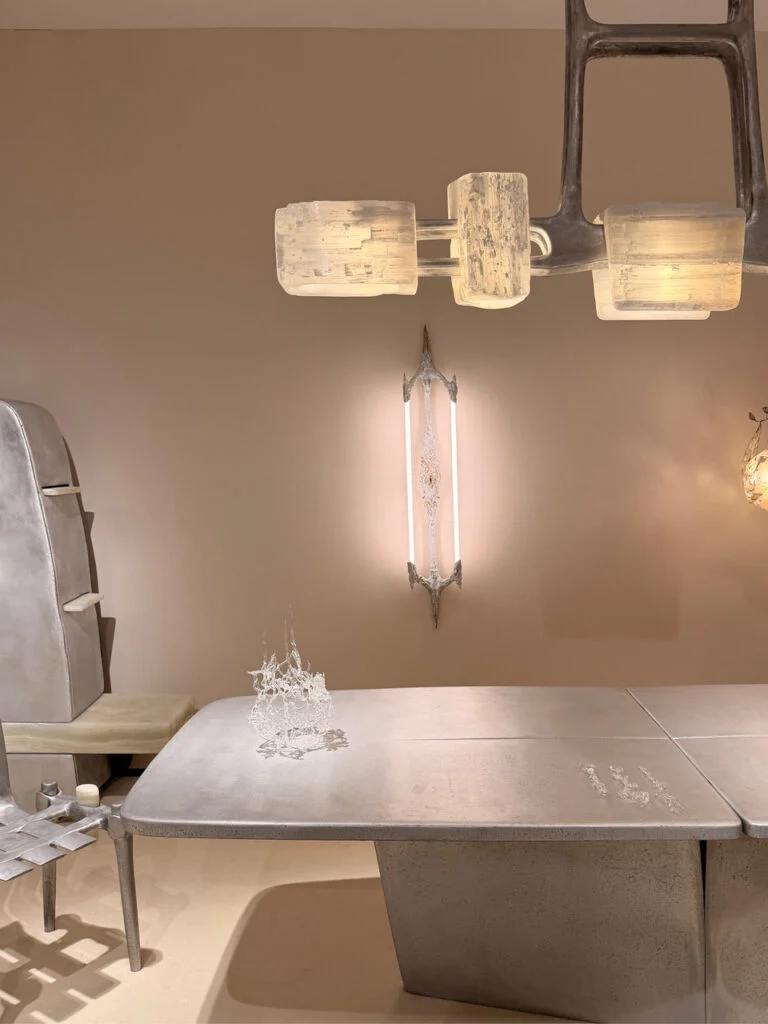
Monolithic geometry: cast metal dining table paired with illuminated selenite blocks at Galerie Boketto
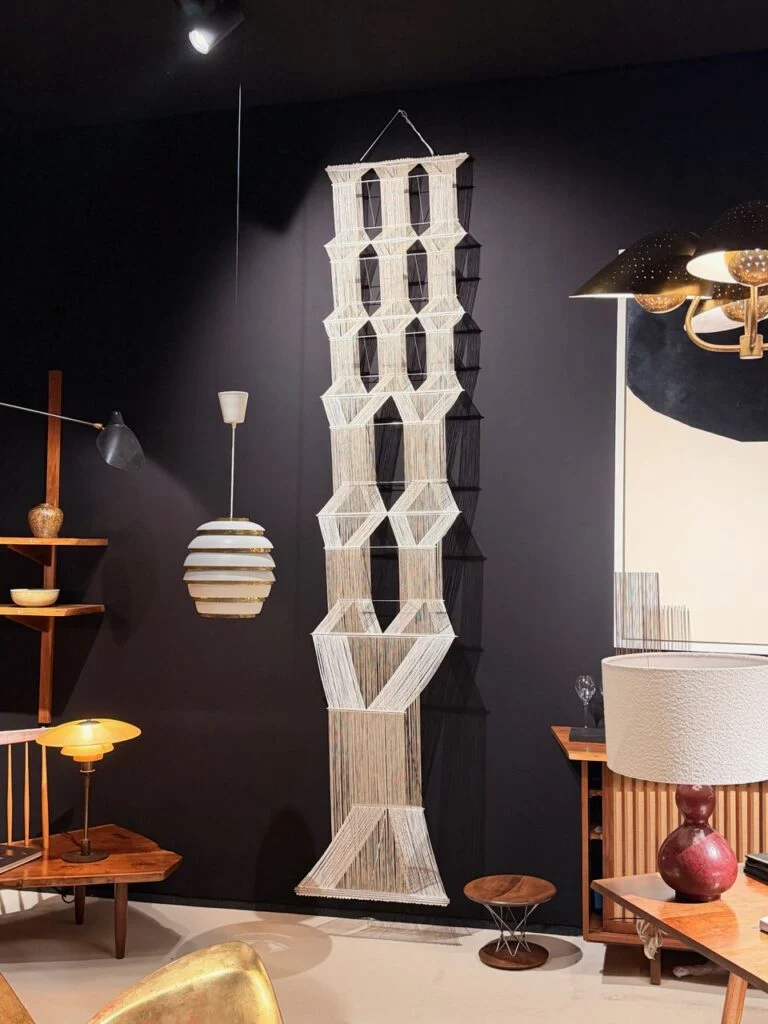
Vertical scale and tactile texture: a floor-to-ceiling woven textile installation defining circulation in high-ceilinged reception rooms.
The Art of the Centrepiece: Monumental Biomorphic Furniture
In high-end interior architecture, large reception rooms, whether in a Victorian villa in Holland Park, a double-fronted mansion in Hampstead, or a lateral apartment in Knightsbridge, require anchor pieces that possess both gravitational weight and organic flow.
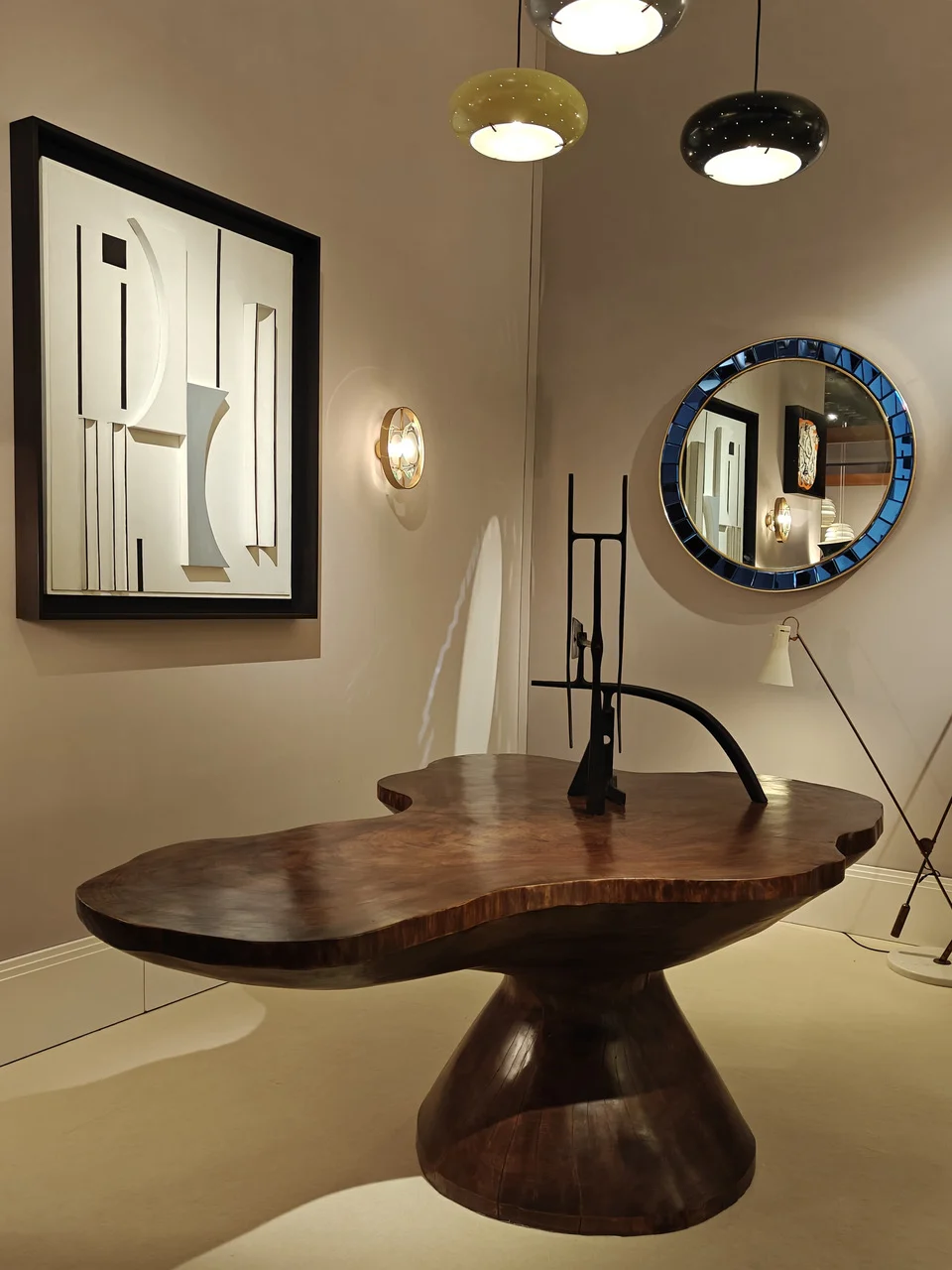
Monumental Biomorphism: José Zanine Caldas (Portuondo Gallery) One of the undisputed masterpieces at Berkeley Square was the 1977 biomorphic dining table designed by Brazilian master José Zanine Caldas, presented by Portuondo Gallery. Carved from a massive section of salvaged indigenous timber with an undulating, organic tabletop balanced upon a conical solid-wood plinth, this piece exemplifies why mid-century craftsmanship remains peerless.
Architectural Integration: In our residential work across Chelsea and West Hampstead, integrating a biomorphic wood centrepiece breaks the rigid orthogonal geometry of contemporary floor plans, infusing spaces with warm tactile patina and historic provenance.
Architectural Radial Bronze: Antoinette Faragallah (Chahan Gallery) Chahan Gallery showcased a low-profile circular coffee table by Antoinette Faragallah featuring a concentric, chiseled bronze relief surface reminiscent of ancient sundials. Its dark patinated pedestal grounds the room, creating an exquisite tactile contrast when positioned over hand-woven chevron wool and silk rugs.
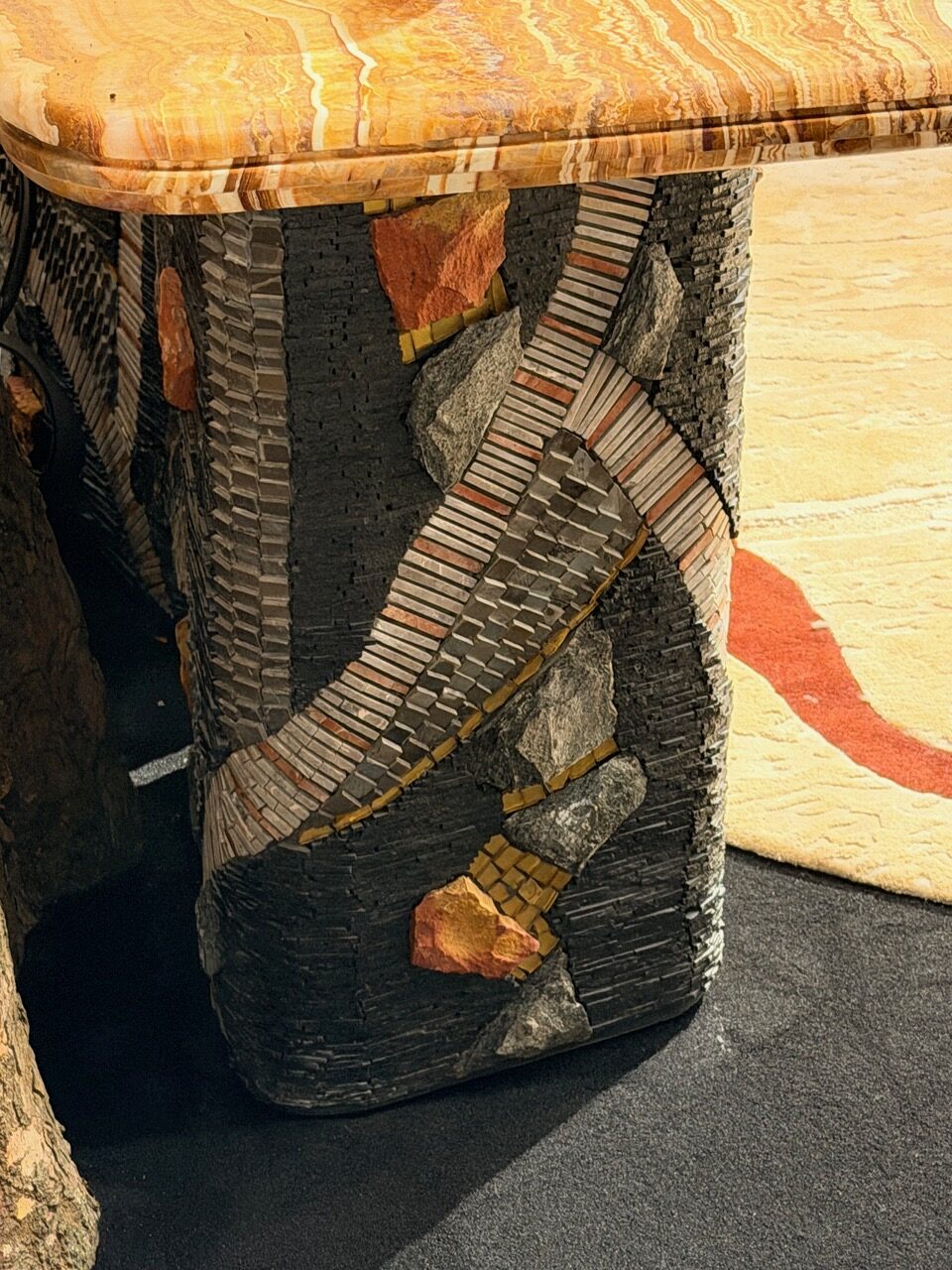
Mineral Precision & Micro-Mosaic: Cohiba Console by Stéphanie Coutas Stéphanie Coutas demonstrated the apex of mineral masonry with the Cohiba Console. Featuring an intricately profiled, bookmatched banded honey onyx top set over faceted sculptural legs hand-inlaid with volcanic basalt and terracotta micro-mosaics, this piece represents pure direct-to-artisan execution.
Architectural Integration: An ideal statement piece for formal entrance galleries in Belgravia or South Kensington, where dramatic directional wall washing highlights the translucent banding of the natural onyx.
Monumental biomorphism: José Zanine Caldas's 1977 carved solid-timber table, exhibited by Portuondo Gallery
Antoinette Faragallah’s radial bronze table for Chahan Gallery features a hand-chiseled concentric surface over an ebonized pedestal
Sculptural Illumination: Light as Dimensional Sculpture
Lighting design in luxury residential projects must transcend functional illumination. Fixtures must operate as hanging or mounted sculptures when unlit, and create atmospheric shadow plays when illuminated at dusk.
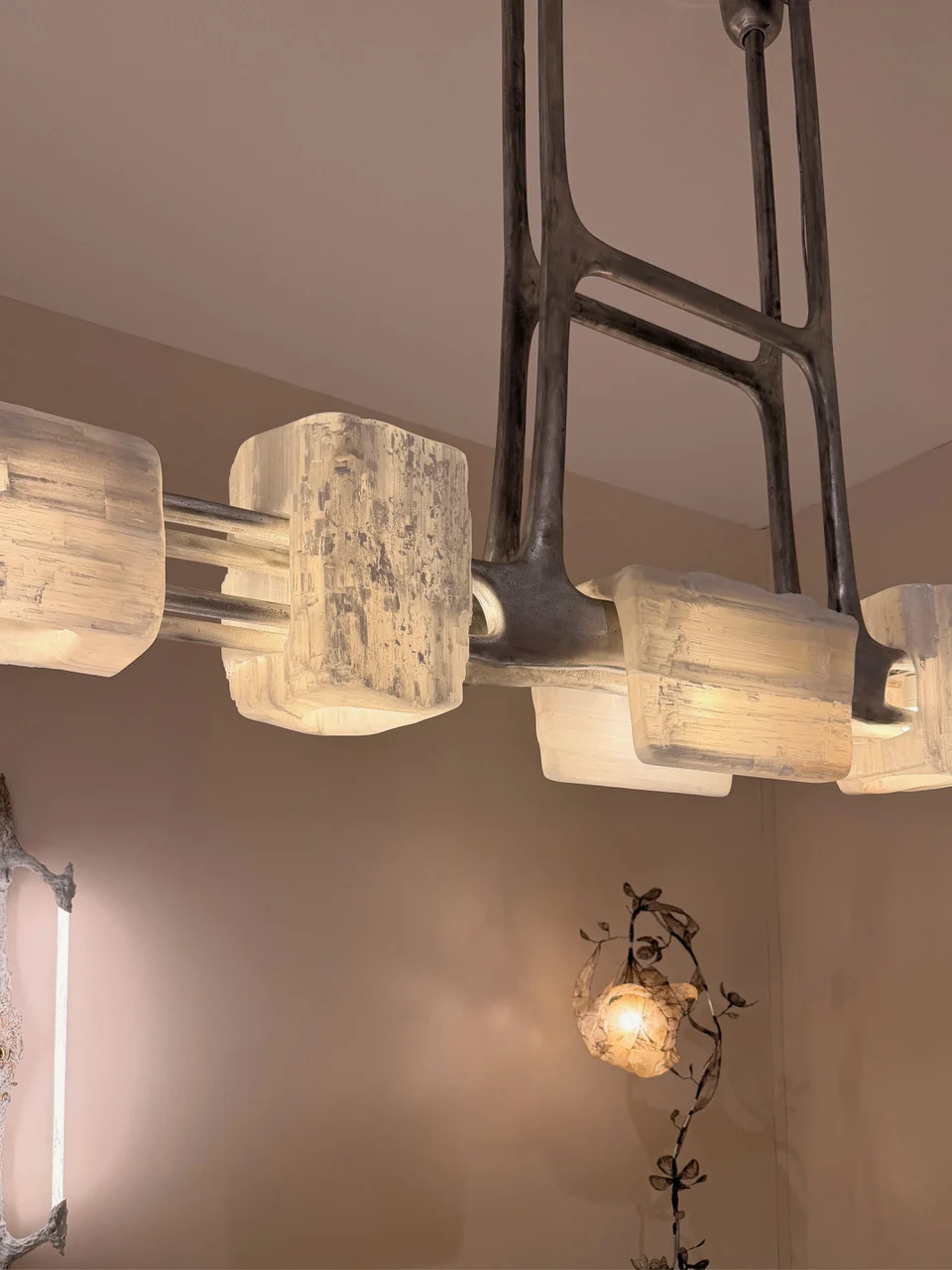
Translucent Mineral Lighting: The Halo Chandelier (Galerie Boketto) Moulay Hafid Sdikiene’s Halo ceiling light pairs cast structural metal armature with rough-hewn, light-filtering blocks of translucent selenite. The tension between cold industrial metal and luminous, crystalline mineral blocks provides the exact visual weight needed over bespoke kitchen islands or long dining suites.
Organic Cellular Clouds: Surface of Memory by Kyeok Kim (Charles Burnand Gallery) Kyeok Kim’s cellular chandelier series resembles woven sea sponges or biomorphic pods suspended effortlessly in space. The perforations allow warm interior LEDs to cast delicate lace-like shadows across nearby surfaces.
Architectural Integration: Perfect for voluminous stairwell voids in Notting Hill and Primrose Hill townhouses, where a massive solid chandelier would block natural light.
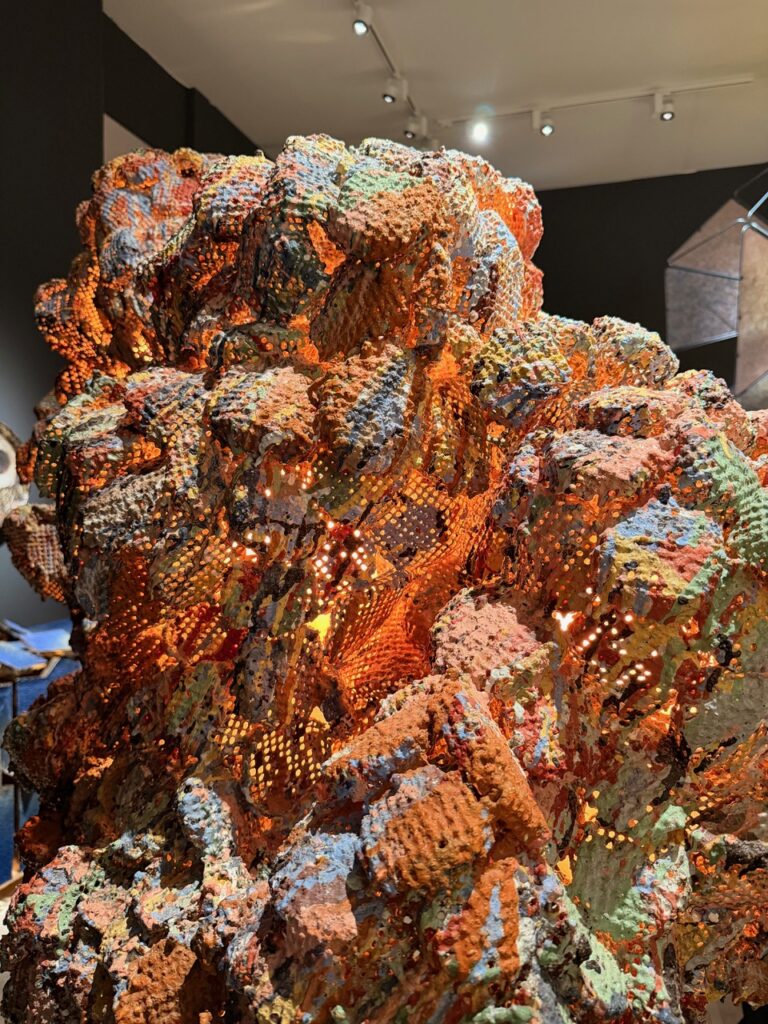
Organic Primitivism: Nacho Carbonell Nacho Carbonell’s monolithic lighted sculpture merges metal wire mesh, aggregated gravel, organic plaster, and tinted resin into a glowing, volcanic organism. This type of collectible art challenges conventional notions of luxury, proving that raw, tactile curiosity is the ultimate form of modern sophistication.
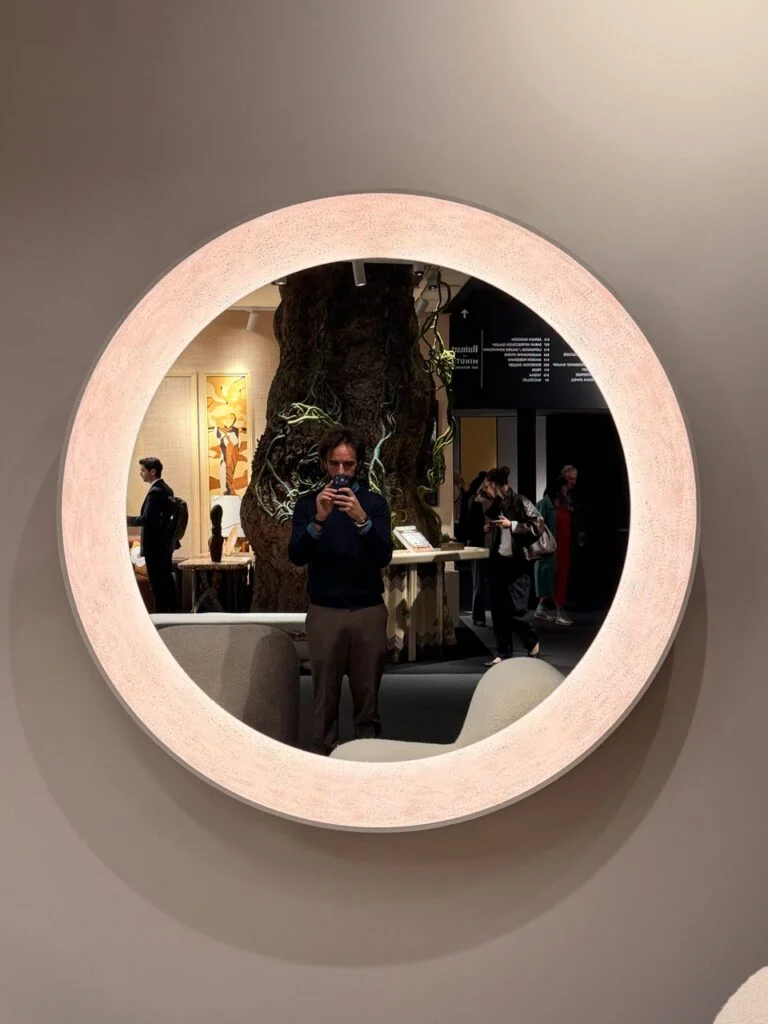
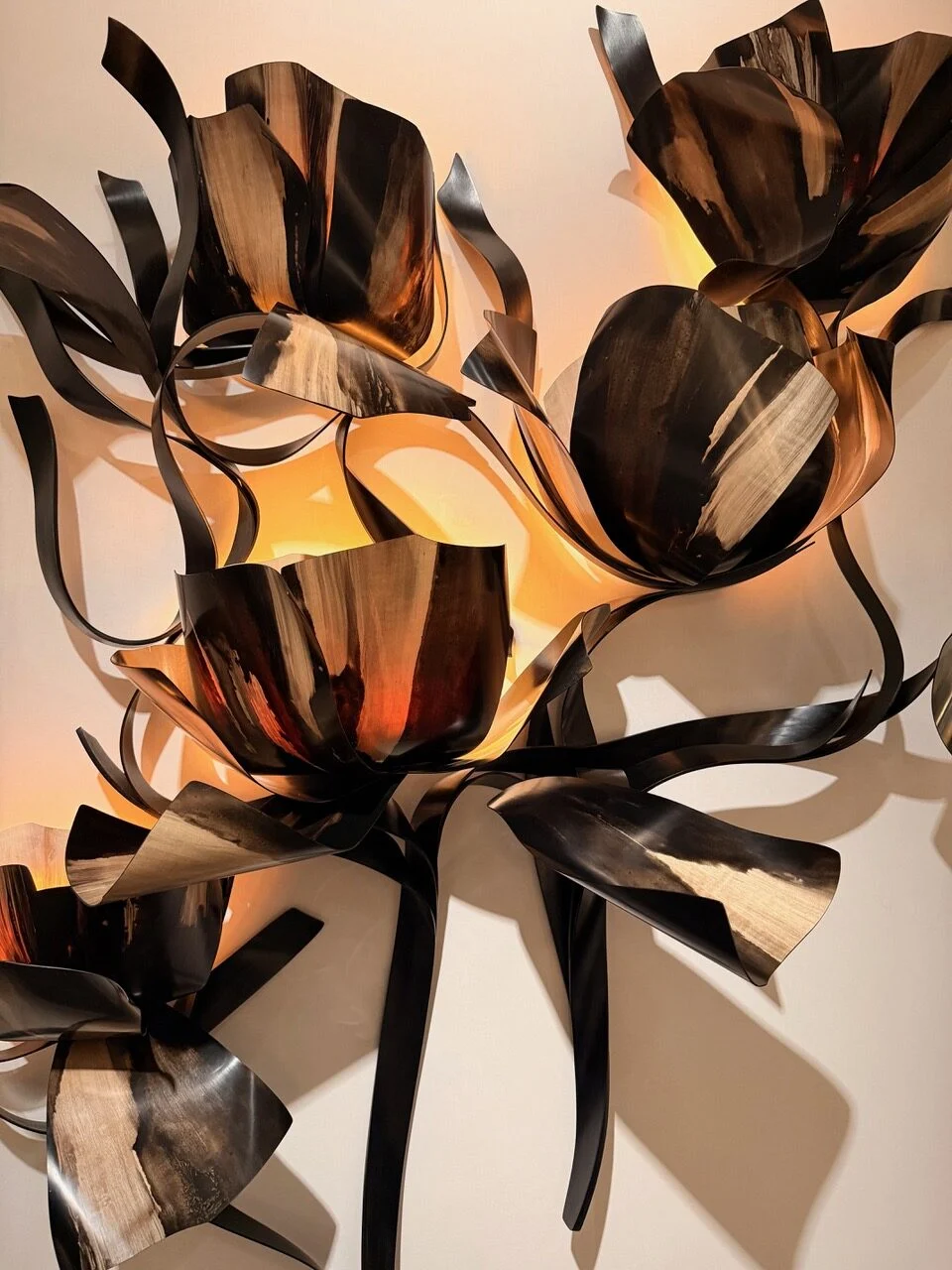
Luminous Wall Accents & Mirrors: Emmanuelle Simon & Ian Milnes At Théorème Editions, Emmanuelle Simon exhibited a minimalist circular halo mirror featuring an illuminated back-lit rim rendered in textured micro-plaster, offering a serene, celestial glow. In contrast, Ian Milnes’ Creeping Midnight sconces at Charles Burnand Gallery twist outward like patinated bronze orchids, casting ember-toned reflections across dark lacquer walls.
Nacho Carbonell’s tactile luminaire combines perforated metal mesh, raw plaster aggregate, and internal ambient illumination
Emmanuelle Simon’s backlit halo mirror for Théorème Editions, framed in hand-applied textured plaster
Fine Art Integration: Curating Modern Masters in Domestic Spaces
A home designed to the highest standard must establish an authentic dialogue with high-value collectible art. Sourcing museum-grade twentieth-century paintings and contemporary sculpture requires an acute architectural understanding of sightlines, ceiling heights, and conservation-grade lighting.
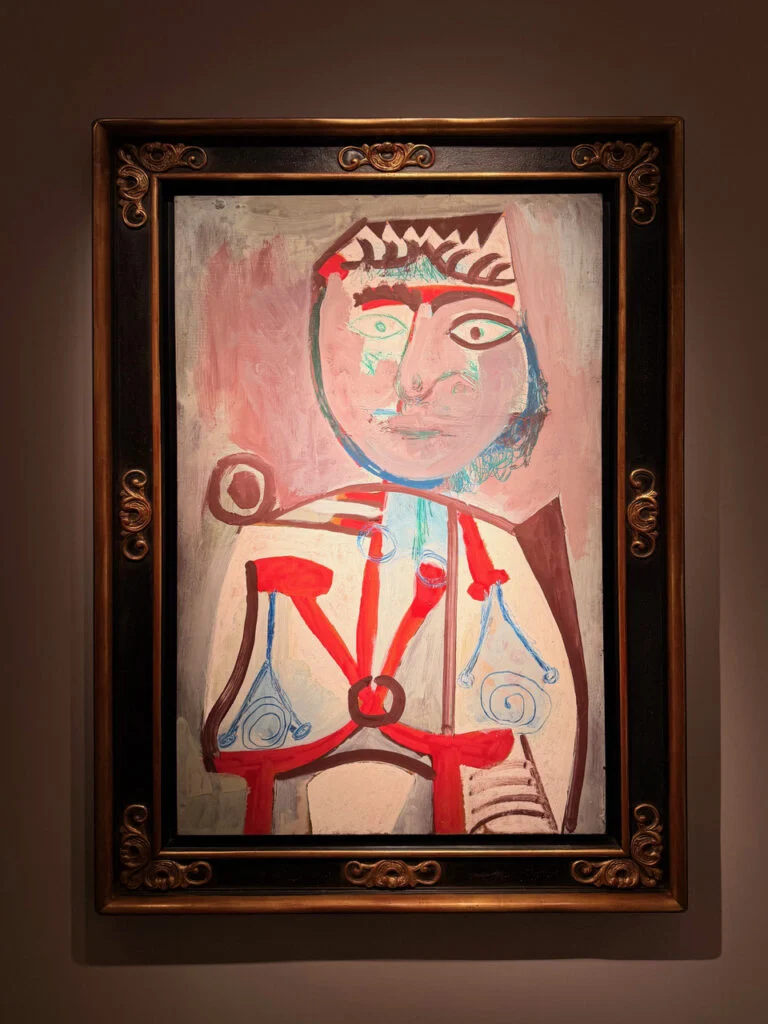
The Presence of Modern Masters: Pablo Picasso at Opera Gallery Opera Gallery commanded attention with Pablo Picasso’s 1970 oil on canvas, Personnage. Displayed in a carved gilded antique frame, the vibrant red, pink, and graphic brushwork exemplifies how historical modern masters command an architectural interior.
Architectural Integration: In our turnkey renovations across Mayfair and St John’s Wood, spaces featuring prominent private art collections are engineered around proper spatial breathing room: museum-standard wall reinforcements, concealed linear picture rails, and precise 98+ CRI LED art-focus framing projectors that prevent UV degradation.
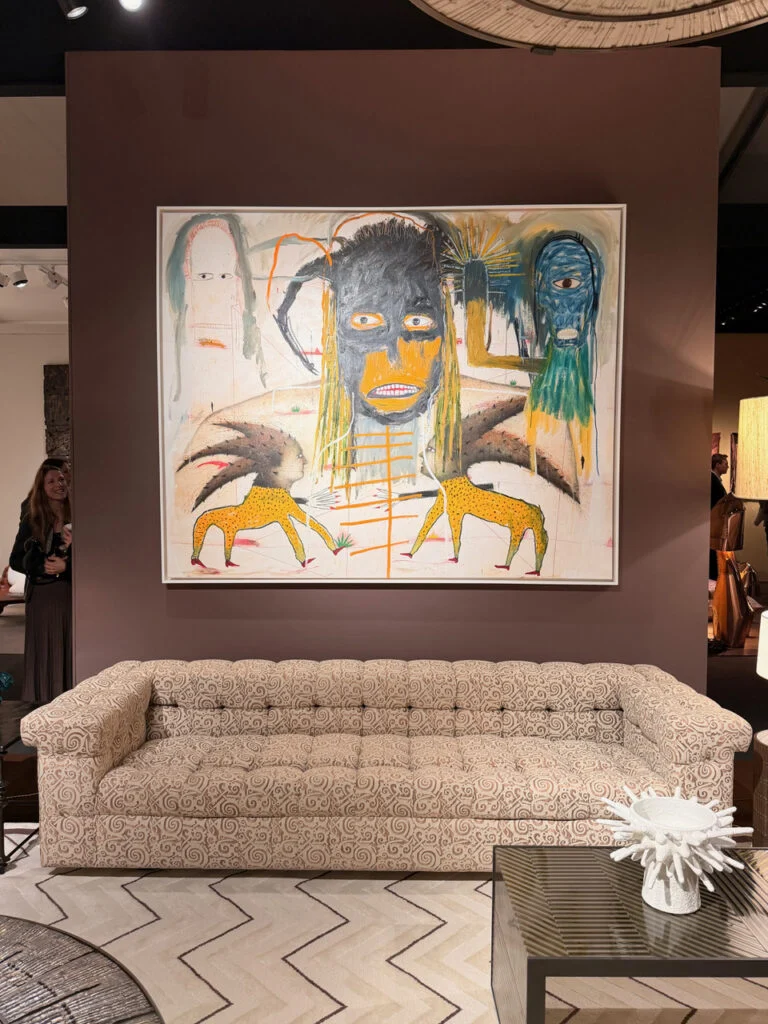
Layered Expressionism: Chahan Gallery’s Curated Salon Chahan Minassian mastered the art of layering: hanging an expansive, graffiti-infused expressionist canvas directly above a tailored, channel-tufted sofa upholstered in geometric swirling jacquard, flanked by spiked ceramic sculptures. This approach illustrates how contrasting high-energy contemporary art with subdued architectural furniture creates depth without sensory overload.
Modern masters in domestic architecture: Pablo Picasso’s 1970 canvas Personnage presented by Opera Gallery
Curating art and bespoke upholstery: Chahan Gallery pairs expressive figurative painting with tailored, low-profile seating
“ Architecture shapes the volume, but art gives it a voice. When thoughtfully curated, a work of art ceases to be an ornament—it becomes the very soul of the interior. ” PAOLO ROTA
Material Innovation: Glass Optics, Tactile Shells & Korean Ceramics
Materiality is the soul of bespoke interior design. PAD London highlighted several ground-breaking explorations into how everyday raw materials are transformed through artisanal devotion:
Optical Glass Geometry: The Iris coffee table by British designers Edward Barber and Jay Osgerby (Galerie kreo) features a circular, deep-fluted glass basin with spectral gradient stripes. Its precision-cut facets manipulate light across the room as the sun moves throughout the day.
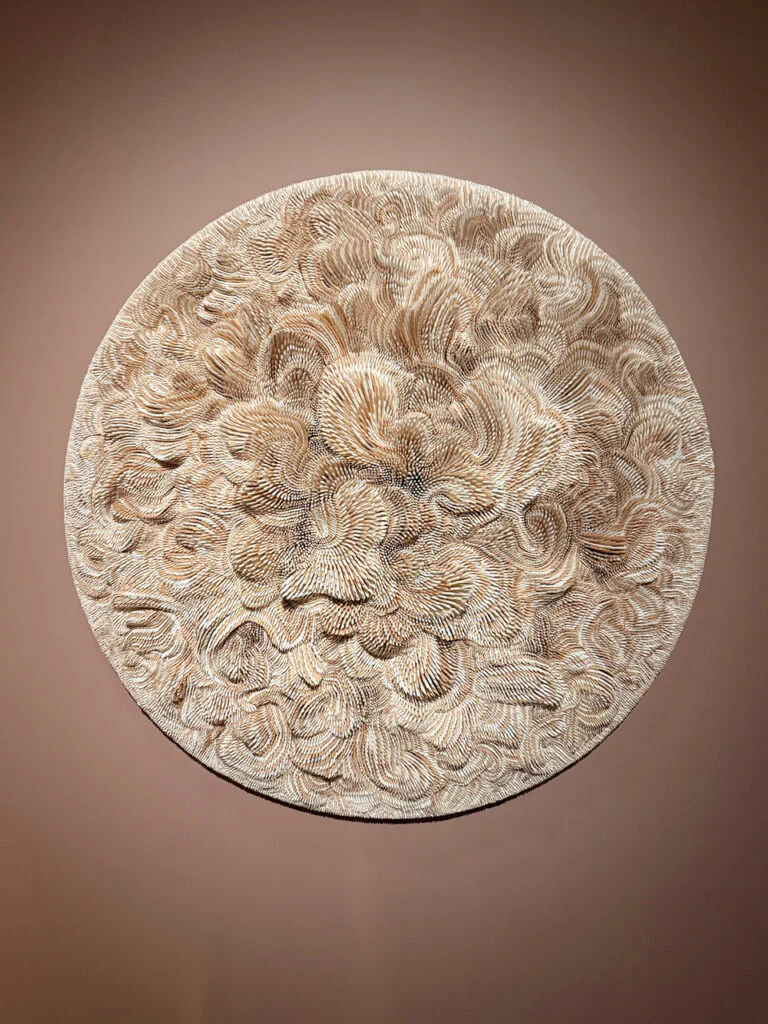
Intricate Shell Mosaics: Rowan Mersh’s Pithvava Mini at Gallery FUMI presents thousands of miniature dentalium sea shells meticulously hand-wired into swirling, topographical waves resembling carved alabaster or petrified floral patterns.
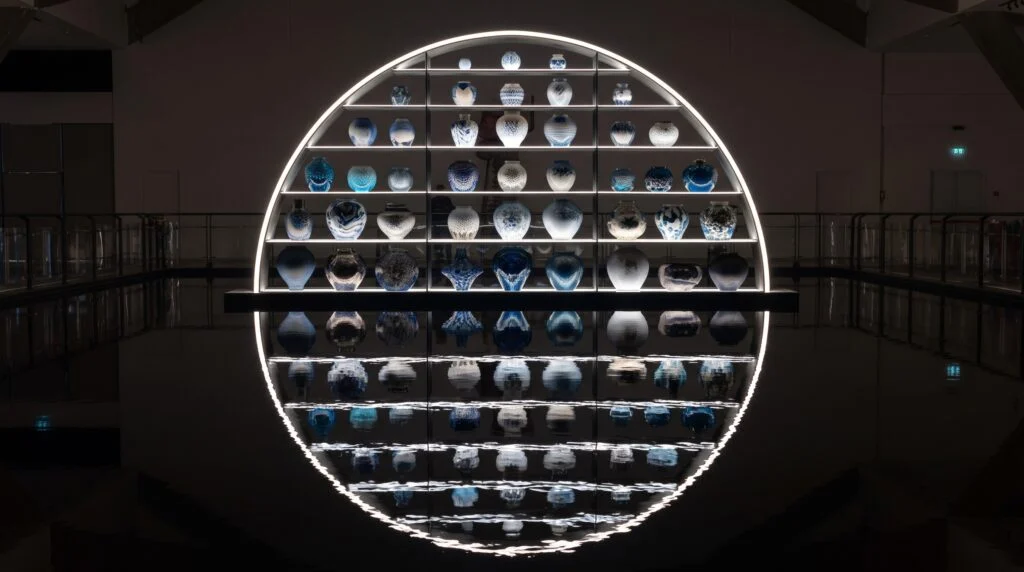
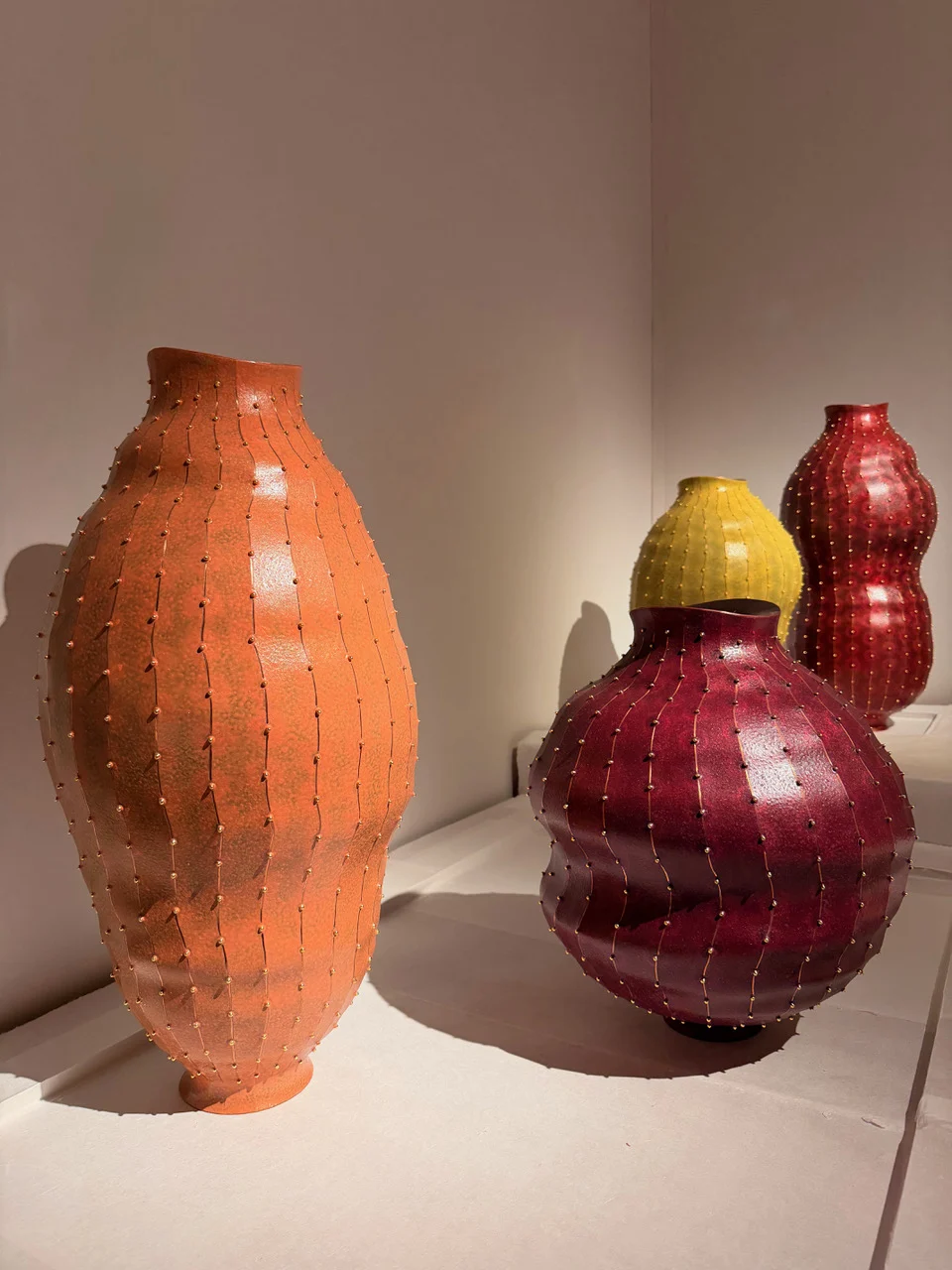
Contemporary Korean Ceramic Craft: Lee Jaiik’s studded, ribbed ceramic vases at LVS Craft Gallery bridge traditional East Asian celadon and terracotta firing with vibrant pop pigments (saffron yellow, oxidized orange, and deep plum).
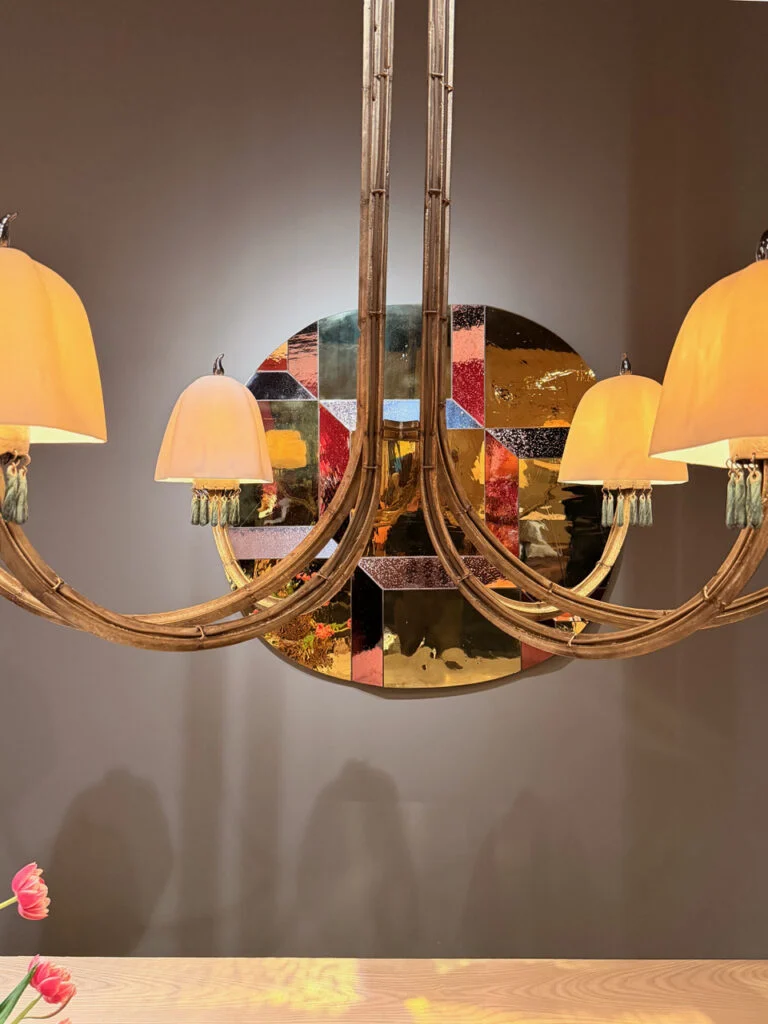
Reflective Dimensions: Sam Orlando Miller’s faceted, antiqued mirrored compositions at Gallery FUMI, designed to reflect sculptural brass chandeliers and natural daylight in fractured, painterly perspectives.
Hand-Sculpted Terracotta: Théophile de Bascher’s Fracas centerpiece tray at Théorème Editions, evoking brutalist brick masonry compressed into a soft, undulating tabletop vessel.
Artisanal devotion: Rowan Mersh’s Pithvava Mini at Gallery FUMI, composed of thousands of hand-wired dentalium shells
Layered optical perspectives: Sam Orlando Miller’s faceted tinted mirror reflects warm chandelier illumination at Gallery FUMI
Bespoke Procurement & The Design Philosophy of Paolo Rota
Acquiring limited-edition masterpieces at fairs like PAD London or commissioning bespoke joinery from multi-generational workshops in Brianza, Verona, or Murano requires more than aesthetic appreciation, it requires rigorous technical execution.
At Paolo Rota Interiors, our practice bridges contemporary British spatial planning with direct, turnkey Italian craftsmanship and international art procurement:
Architectural Scale & Sightlines: Every collectible piece is modeled in 3D within the architectural envelope to guarantee that ceiling loads, door clearances, and circulation paths harmonize effortlessly.
Direct Artisan & Gallery Access: We bypass commercial distributors, collaborating directly with master stone carvers, bronze foundries, and leading international galleries to commission pieces tailored to the unique dimensions of your home.
Turnkey Engineering: From complex floor load-bearing assessments for monumental solid-stone furniture to integrated smart lighting scenes that flatter delicate surfaces, we manage the complete lifecycle from sketch to installation.
Whether you are embarking on the complete turnkey renovation of a heritage property in South Kensington or seeking bespoke furniture procurement for a contemporary residence in Holland Park or Hampstead, we invite you to explore our tailored interior architecture services or read our recent analysis on Italian Craftsmanship & Bespoke Joinery.
Frequently Asked Questions
What is collectible design in luxury interior architecture? Collectible design refers to limited-edition, bespoke, or one-of-a-kind furniture, lighting, and sculptural objects created by master artisans and renowned designers. Unlike mass-produced luxury items, collectible pieces carry documented artistic provenance, appreciate in value over time, and bridge the boundary between functional domestic design and museum-grade contemporary art.
How does an interior architect integrate fine art and collectible furniture into heritage London properties? Integrating collectible design into period townhouses across Mayfair, Belgravia, Chelsea, and Kensington requires structural and curatorial harmony. Rather than turning the home into a sterile gallery, an interior architect balances historical moldings and architectural proportions with bold, high-contrast focal points. This includes engineering ceiling loads for monumental sculptural chandeliers, specifying museum-grade 98+ CRI directional lighting, and customizing joinery to frame specific canvases or sculptures.
How does bespoke furniture procurement work for prime central London residences? Bespoke furniture procurement through Paolo Rota Interiors bypasses standard commercial retailers and trade intermediaries. We work directly with leading international galleries (such as those at PAD London) and multi-generational Italian master workshops in Cantù, Verona, and Murano. This direct-to-artisan model allows us to customize finishes, dimensions, and rare stones to the millimeter, delivering bespoke furniture tailored to the precise architectural layout of your home.
Can collectible furniture and modern art be incorporated into practical family living? Yes. Successful prime residential architecture balances tactile luxury with everyday durability. By selecting enduring materials—such as patinated cast bronze, carved solid hardwoods like oak burl or Canaletto walnut, honed natural marbles, and stain-resistant performance textiles—collectible pieces develop a richer patina with age, functioning as durable, living elements within daily family life.
Which areas in London do you provide interior architecture and bespoke procurement services for? Paolo Rota Interiors provides turnkey interior architecture, bespoke joinery design, and art procurement across Prime Central and North-West London, including Mayfair (W1), Belgravia (SW1), Knightsbridge (SW1X/SW7), South Kensington (SW7), Chelsea (SW3/SW10), Holland Park & Notting Hill (W11), West Hampstead (NW6), Hampstead (NW3), Primrose Hill (NW1), and St John’s Wood (NW8).
We use essential cookies to make this website work and, with your consent, analytics cookies and Google Maps to understand how our website is used and to show our location. You can change your choice at any time. Privacy & Cookie Policy