
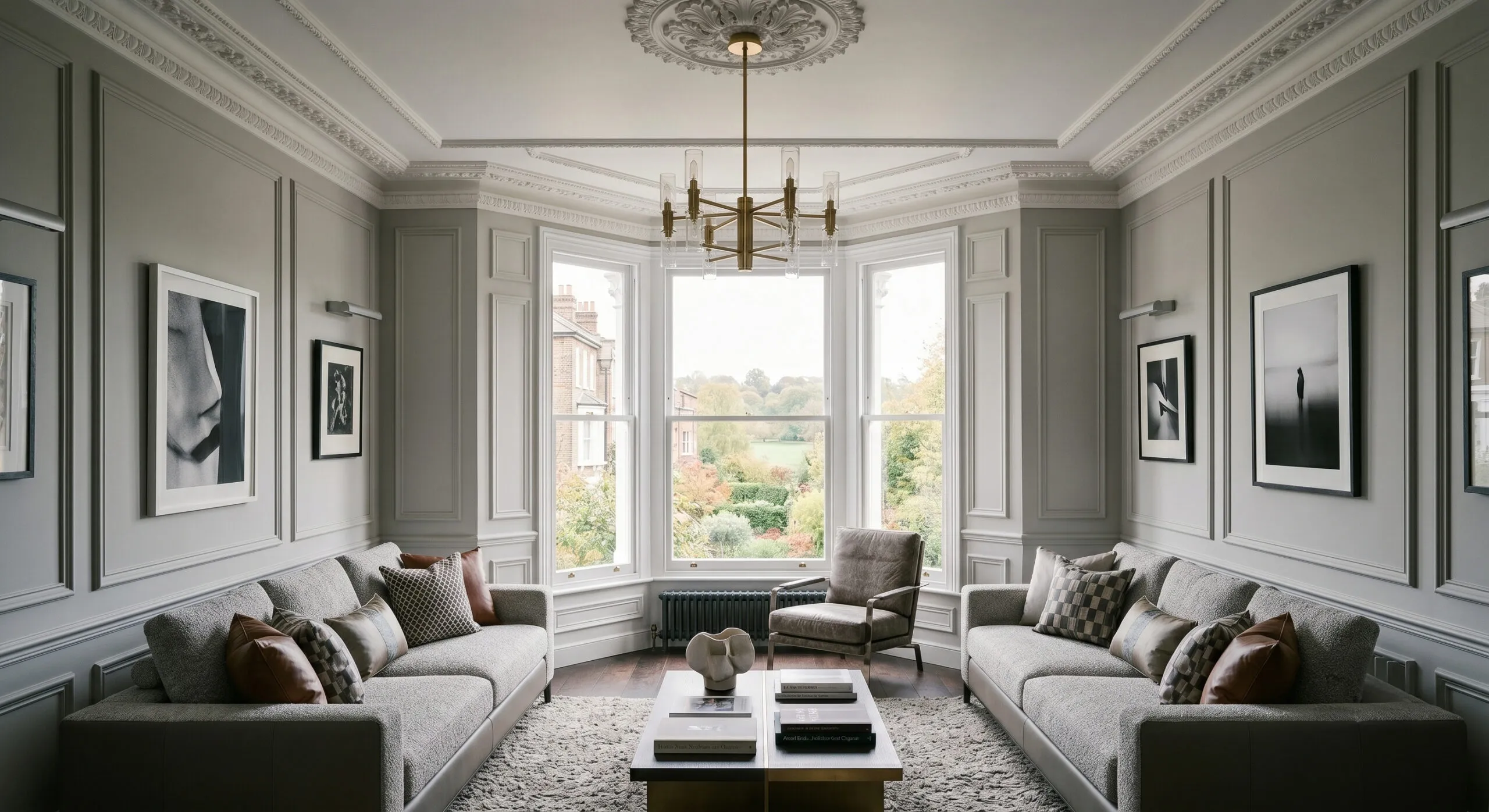
Designing with Classical Mouldings: How to Balance Heritage and Contemporary Luxury
When restoring or elevating a premium residential property—whether a grand Georgian townhouse in West Hampstead or a lofty, historic apartment in Milan—the architectural bones of the space dictate its ultimate success.
Among these structural features, interior plasterwork holds a unique power. Too often, clients assume that traditional cornices, wall paneling, and ceiling roses force an interior into a strictly conservative box. But true luxury design does not demand a choice between historic preservation and contemporary elegance; it thrives in the tension between them. When handled with architectural precision, classical mouldings serve as the ultimate structural frame for modern, sophisticated living. Here is how we navigate this balance at Paolo Rota Interiors.
1. The Rule of Proportion and Volume
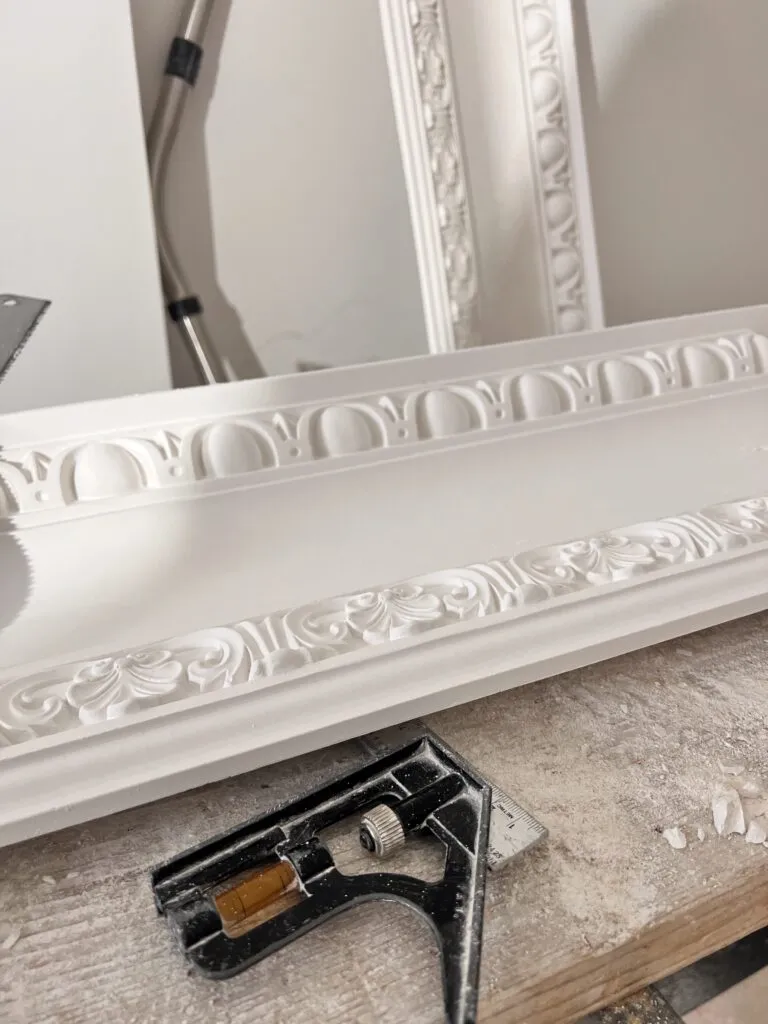
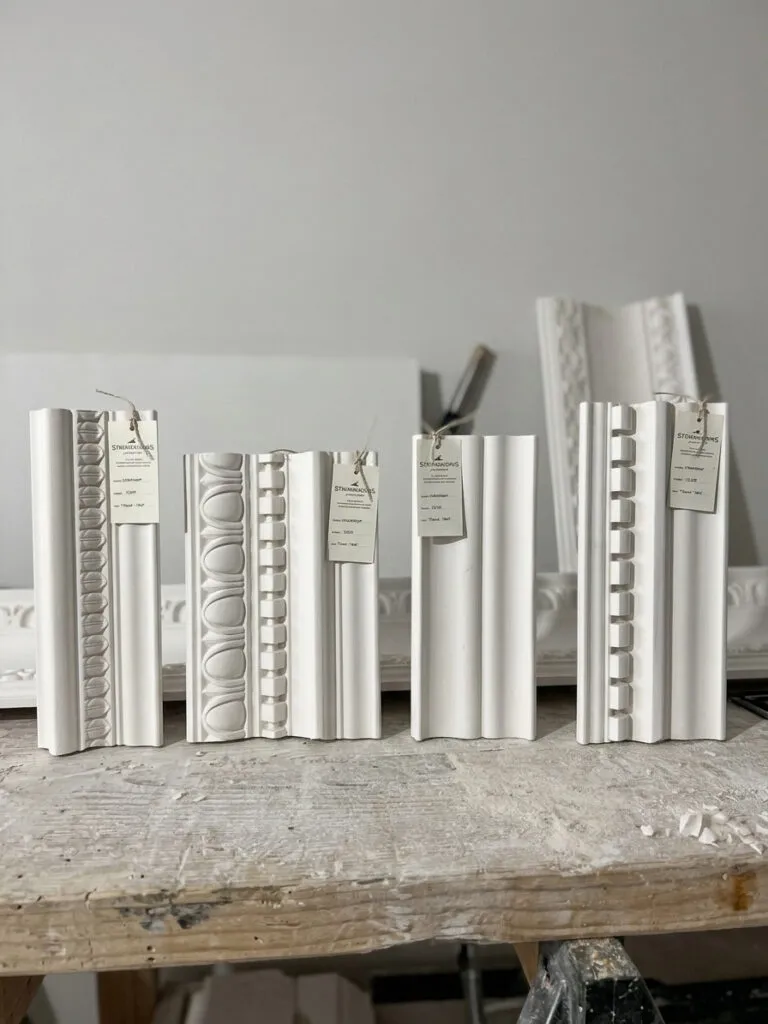
The greatest misstep in luxury renovations is treating architectural profiles as an afterthought, selected from a standard catalog without context. Mouldings must never simply sit on a wall; they must respond to the volumetric scale of the room. In high-ceilinged properties, a cornice that is too shallow feels unsubstantial and cheapens the architecture. Conversely, a profile that is too heavy or overly ornamental can suffocate the space, pulling the ceiling downward visually. We approach plasterwork with structural rigor, ensuring the depth of the cornicing and the projection of the dado rails perfectly scale with the room’s absolute height and light exposure. The Studio Rule: True scale creates breathing room. A grand cornice should feel like a natural architectural extension of the wall, not an embellishment pasted onto it.
2. Framing Contemporary Design: The Contrast Play
The intersection of different design eras is where an interior gains emotional resonance and character. Instead of mimicking 19th-century furniture to match historic plasterwork, we introduce clean, minimalist Italian tailoring. Placing a low-slung, highly structured modular sofa or an avant-garde, stone-pedestal dining table against an intricately molded wall creates an arresting visual dialogue. The simplicity of modern furniture profiles prevents the traditional plasterwork from feeling stuffy, while the historic mouldings give the minimalist furniture a sense of grounded permanence and history.
3. The Power of the Central Lighting Frame
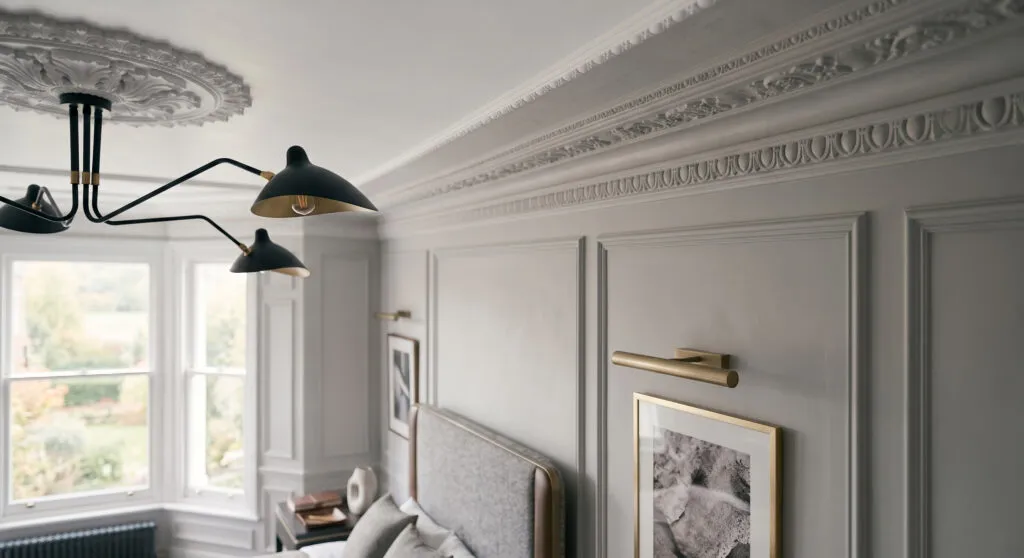
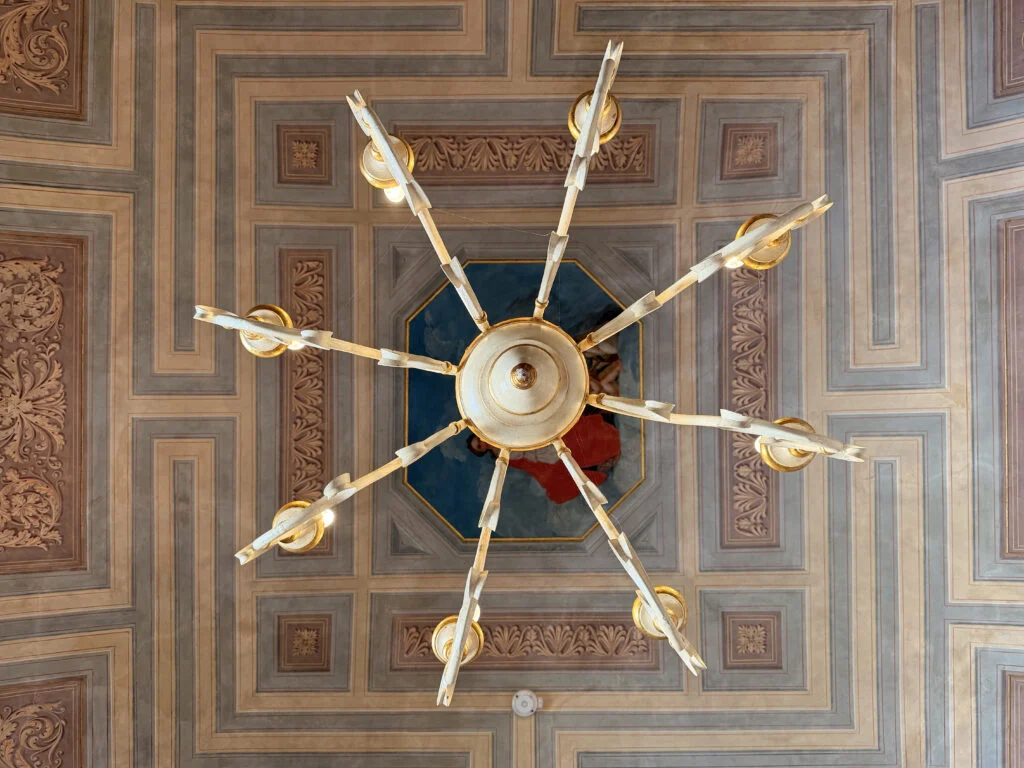
A traditional, hand-crafted ceiling rose should not be viewed as an antique relic. Instead, treat it as a masterfully sculpted backdrop for modern lighting design. One of our signature approaches is pairing a heavily detailed, classical central moulding with an ultra-minimalist, geometric, or fluid contemporary chandelier. When a modern, sculptural light fixture is suspended from a historic ceiling rose, the light itself becomes a piece of art. The intricate shadows cast by the plasterwork add a layer of soft, cinematic texture to the room when night falls.
4. Unifying the Space: The Monochromatic Secret
If you want to incorporate extensive wall paneling and deep crown cornicing without making the room feel heavy or split in two, the secret lies in the palette. Traditionally, cornices and ceilings were painted stark white against colored walls. To achieve a contemporary aesthetic, we prefer a monochromatic approach: painting the walls, skirting boards, door frames, and all ceiling mouldings in the exact same tone and finish—such as a rich, matte plaster or a sophisticated chalky gray. This technique unifies the architectural details, diffuses harsh shadows, and creates a seamless, sculptural envelope that makes the ceilings feel infinitely higher and the entire space intensely cohesive.
Designing the Transition
Preserving heritage is not about freezing a space in the past; it is about understanding its spirit well enough to guide it into the present. By respecting the structural integrity of classical mouldings while introducing the clean lines of contemporary Italian craftsmanship, we create homes that feel entirely timeless.
Planning an international property renovation? Discover our turnkey interior architecture and bespoke procurement services at Paolo Rota Interiors.
“ To be inspired by the past is to understand the soul of a space. To design for the future is to give it a new purpose ”
PAOLO ROTA
Continue reading
 Architecture · 6 min readPop Art & Luxury Furniture Procurement for Bespoke InteriorsRead article
 Architecture · 5 min readTimeless Italian Craftsmanship: How Gubbio’s Heritage Shapes Luxury Interior DesignRead article
 Architecture · 5 min readHomo Faber & Bespoke Italian Craftsmanship | Paolo RotaRead article